
Why I'm A Racist
And you should be, too.

Racism is a sticky topic and one I’ve been forced to grapple with my entire life. As a child, I was taught that it was both morally wrong and intellectually baseless. As a young man meeting people from diverse backgrounds, I was confronted with the reality of racial differences. I delved into topics such as crime statistics, IQ variations, stereotype validity, and the impact of diversity on cultural and social cohesion. As a grown man, I found Jesus, who blessed me with moral clarity. And now, as I enter middle age, I can look anyone in the eye and say confidently with the courage of my convictions that I, Lyndon Perry, am a racist.
The purpose of this essay is to explain and defend that position. I will go over key topics, including stigma, etymology, case studies, and theology. I hope you enjoy it.
Racism: Stigma
Let’s start with a hypothetical. Suppose you had the choice between living on an island with 100 white people or an island with 100 black people? Got your answer? If it’s anything other than “Why would that matter? Just flip a coin, lul,” then congratulations: you are a racist.
Don’t believe me? Let’s take a look at the dictionary definition for the term:
A person who believes one race is better than another is racist. Racists discriminate against other races.
Unless you also need me to post the definitions for ‘discriminate’ or ‘better’, I will assume we’re now on the same page. But you don’t like that, do you? You don’t want to be a racist. You’re not alone. A similar question was recently posed on X (the everything app) by Elijah Schaffer.
He asked if not wanting to live around blacks is racist. 87.8% of people who responded voted for “No,” not racist. Presumably, some percentage of the people voting would, in fact, prefer not to live around black people. So why the disconnect? In a word, stigma.
There is a profound stigma around the concept of racism. Racism is neither seen as a personal preference nor as an objective assessment of reality based on empirical evidence and pattern recognition, nor as an innate aspect of human nature. Rather, it is seen as a moral failing. A sin. Something that makes you a Bad Person™.
The stigma around racism is so stifling that people twist themselves into pretzels to justify their racist opinions without having to accept the label. I recently experienced this in rather stark fashion. Earlier this year, I was invited to the No Jumper podcast to discuss race issues with a black conservative. Right at the start of the conversation, the host called me racist, and I accepted the characterization, as I have been doing for several years now.
Given that the other guy’s most substantive argument to the issue of black people murdering white people was to point the finger at laws against physical child abuse, and given that this might be the most retarded argument I’ve heard in 45 years on this planet and 10 years of doing political punditry, and given that everyone in the comments seemed to think he “cooked” me, I can only conclude that the stigma of racism is so overwhelmingly powerful that the label made everyone decide I must be wrong.
Putting aside the specious reasoning that the root cause of black criminalty and violence is a law preventing them from violently raising well-adjusted children, anyone who has spent any amount of time around black and white people should be able to intuit that black people probably beat their kids more than white people do, both in terms of corporal punishment and physical abuse, which is of course supported by the data.
A 2019 study found that 46% of white parents had spanked their kids vs 59% for blacks, but what is even more interesting is the study which tracked historical changes from 1945-1985 found that the rate for harsh physical punishments (pushing, grabbing, slapping, or hitting, beyond mild spanking) decreased steadily for white people while remaining steady for blacks.
If corporal punishment and beating children are the key to raising well-adjusted law-abiding children (spoiler alert: studies consistently indicate the opposite), then black children should be more well-behaved than whites, not less.
I’m sure you agree with me that racism stigma is the only rational explanation for my poor reception in the debate, so let’s get into more specifically why I am racist, but first, a brief discussion on the etymology.
Racism: Etymology

The term was originally coined in the late 1800s in France by nationalists like Joseph Arthur de Gobineau and Gaston Méry, who used it in a self-affirmative way, without any negative connotation. Gobineau believed that race determines the fate of civilizations. He divided humanity into three primary races—white (Aryan), yellow, and black—with Aryans as the superior, creative force. Civilizational decline, he argued, resulted from racial mixing (miscegenation), which diluted Aryan vitality.
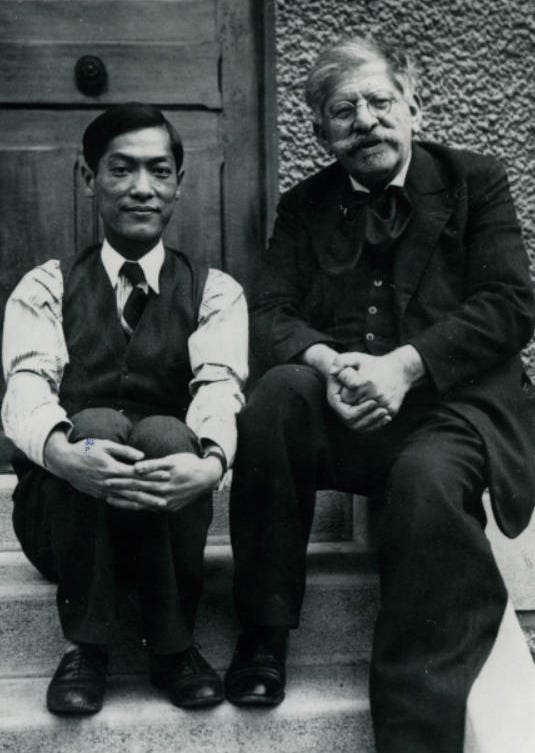
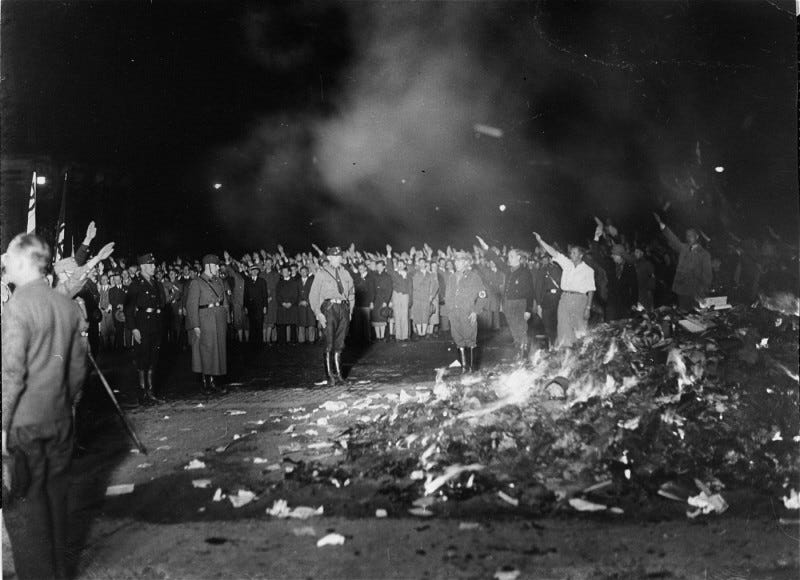
It wasn’t until 1935 that a new book titled Racism was published, which cast the ideology in a derogatory light. The author was a homosexual Jewish perderast named Magnus Hirschfeld. Pictured above with his 39 years younger Chinese lover, Hirschfeld ran the Institute for Sexual Science in Weimar, Germany, where he lobbied for the legalization of homosexuality and performed the world’s first ever sex change operations. When the Nazis came to power in 1933, they looted the Institute and burned its library while Hirschfeld fled into exile. He died shortly after, and his book titled Racism was published posthumously.
Not to go off on a tangent, but the question of Hirschfeld’s pederasty is a topic of some debate, often dismissed as a Nazi propaganda smear campaign. Don’t take my word for it, here is one of his disciples saying it themselves in the year 2023:
So there you have it. The idea of racism was born from a man who cherished his people and sought their continued survival, while the one who branded it as evil and wrong was a pederast who convinced perfectly healthy male subjects to let him surgically remove their testicles as a way of upholding their gender delusions.
But just because the bible tells us that men like Hirschfeld are burning for all eternity in the fiery pits of hell, doesn’t mean that he was wrong about racism. What could ever lead a white person to think that his race was in any way superior?
We’re going to look at a couple of case studies, but allow me to preface this section by saying that, given racial superiority is the height of wrongthink in our current culture, and espousing such views is strictly forbidden on just about every single social media website that exists, I want to make clear that I am simply stating a personal preference. In the same way that a man might find vanilla ice cream superior to chocolate, while another man may disagree, I have a preference for a racially homogenous society made up of my own people. White people. Such a society would, for me, be the ideal place to live and I hope these case studies will help to illustrate why I feel that way.
Racism: Case Studies
Case Study 1: Orania, South Africa

Apartheid South Africa had a horrible reputation for being the world’s most racist regime in the late 1900s. The country was ruled over completely by white colonialists living in wealthy and pleasant enclaves, while the majority of the black population lived in squalid shanty towns. This drone photo from 2024 shows that not much has changed:
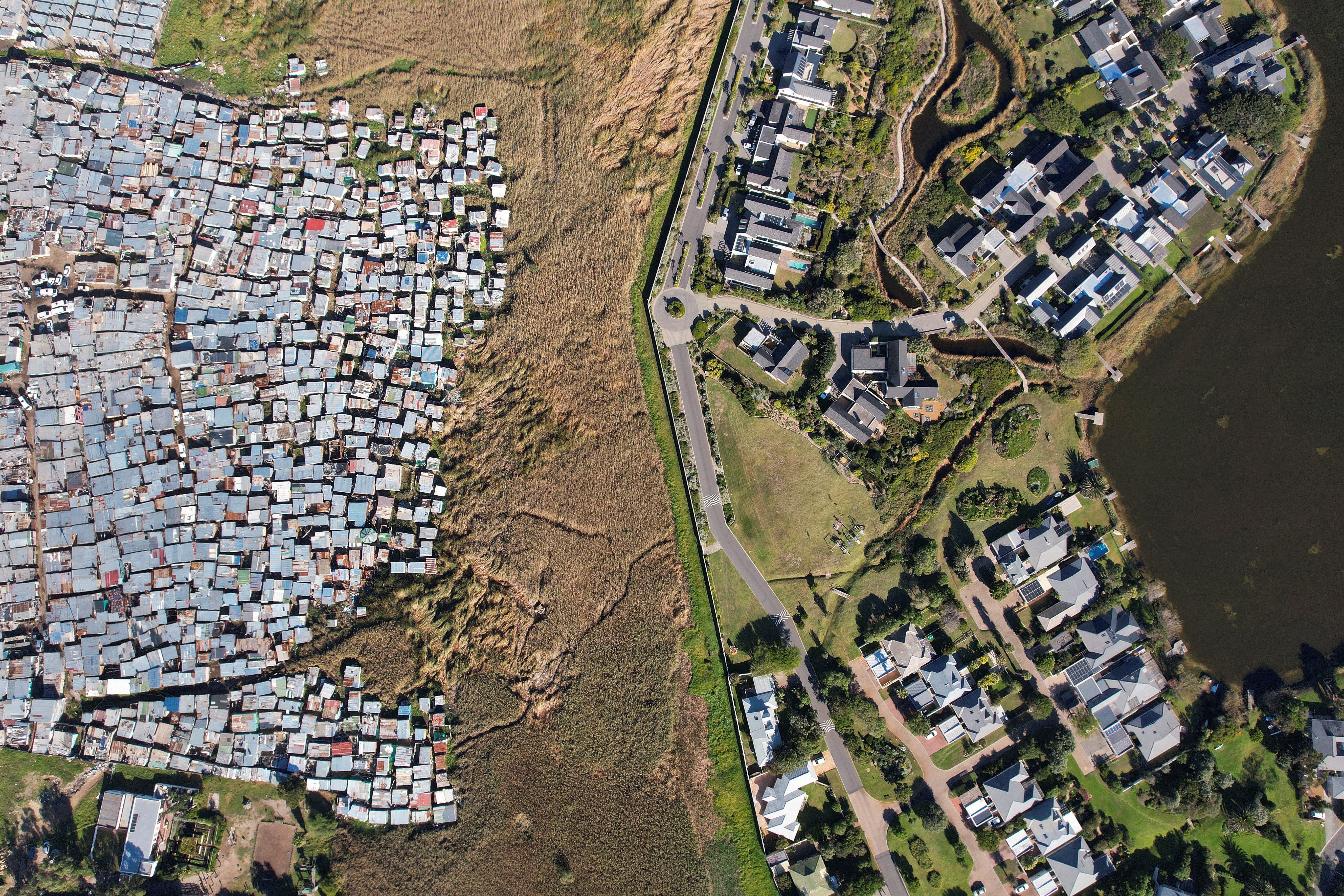
There are two ways to view a photo like this. In the mind of a racist like myself, the takeaway is clear: whites work hard to build beautiful, safe societies for living and raising families. By contrast, equality-minded folks see only exploitation. They believe whites can’t create the prosperous community shown on the right side of the photo without help, even though countless historical examples prove otherwise.
Despite its notorious reputation, the quality of life for Black South Africans under apartheid in the 1980s was comparable to, or in some cases surpassed, that of citizens in similarly sized African countries such as Nigeria, Ethiopia, Zaire, or Ghana. Metrics like life expectancy, literacy rates, per capita income, and access to electricity, running water, and healthcare reflect this parity or advantage. This occurred even though these other nations received substantial foreign aid during the period, while South Africa faced international boycotts and sanctions.
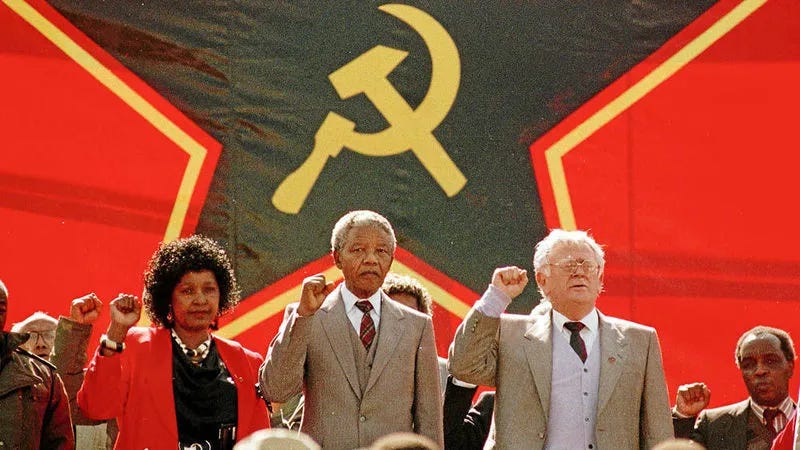
Despite the complexities, envy—fueled by perceptions that White South Africans hoarded wealth and excluded Black South Africans—proved a powerful force in the anti-apartheid movement. This narrative, too compelling to ignore, helped galvanize opposition to the regime. In 1994, apartheid was dismantled, and the African National Congress (ANC), led by Nelson Mandela, assumed power, maintaining control to the present day. (Mandela’s controversial past, including his association with violent tactics, is a separate matter.)

And they all lived happily ever after. Or not quite. Moving people from shantytowns into the suburbs is easier said than done. The ANC, which has received an influx of foreign aid to help with the transition and general development, hasn’t accomplished much beyond increasing the number of welfare recipients year after year while the debt-to-GDP ratio grows steadily. Unemployment has remained almost entirely constant at around 40% while the coal power plants have been poorly maintained, resulting in regular blackouts across the country.
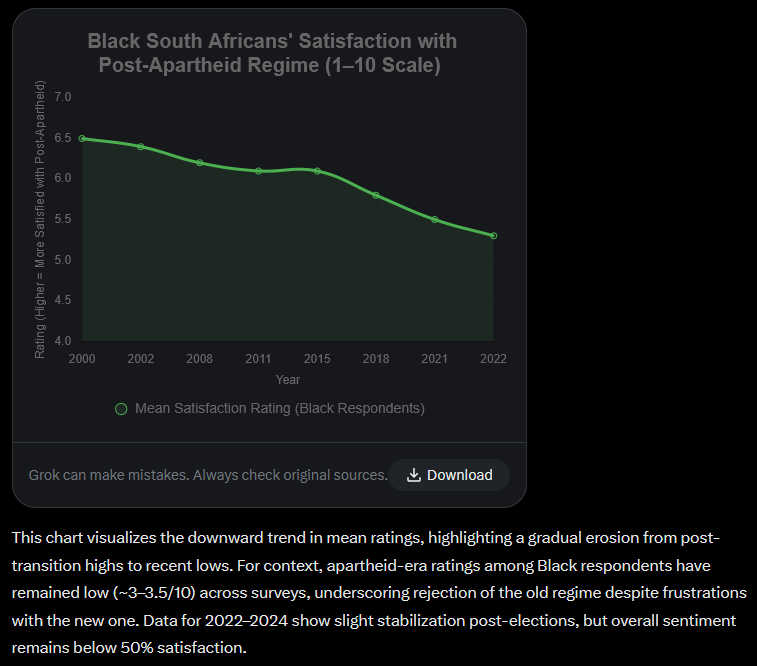
All the while, waiting in the wings is Julius Malema, leader of the Economic Freedom Fighters. An even more radical group of communists who, like Mandela, are also backed by jews, oddly enough. Malema has achieved international notoriety for his massive political rallies where supporters sing songs about killing “boers” (white farmers).
Don’t worry, guys. When asked for clarification if he was encouraging his supporters to go out and kill White South Africans, Malema clarified that, while he cannot rule it out in the future, he is not currently calling for that.
Some of his supporters might have paid more attention to the rallies and less to the deposition, because they have been, in fact, killing many white farmers. These crimes are so brutal as to garner international attention and condemnation. The plight of these farmers was documented in the 2018 documentary film Farmlands and has culminated in a refugee crisis, with President Donald Trump offering refuge to those fleeing persecution.
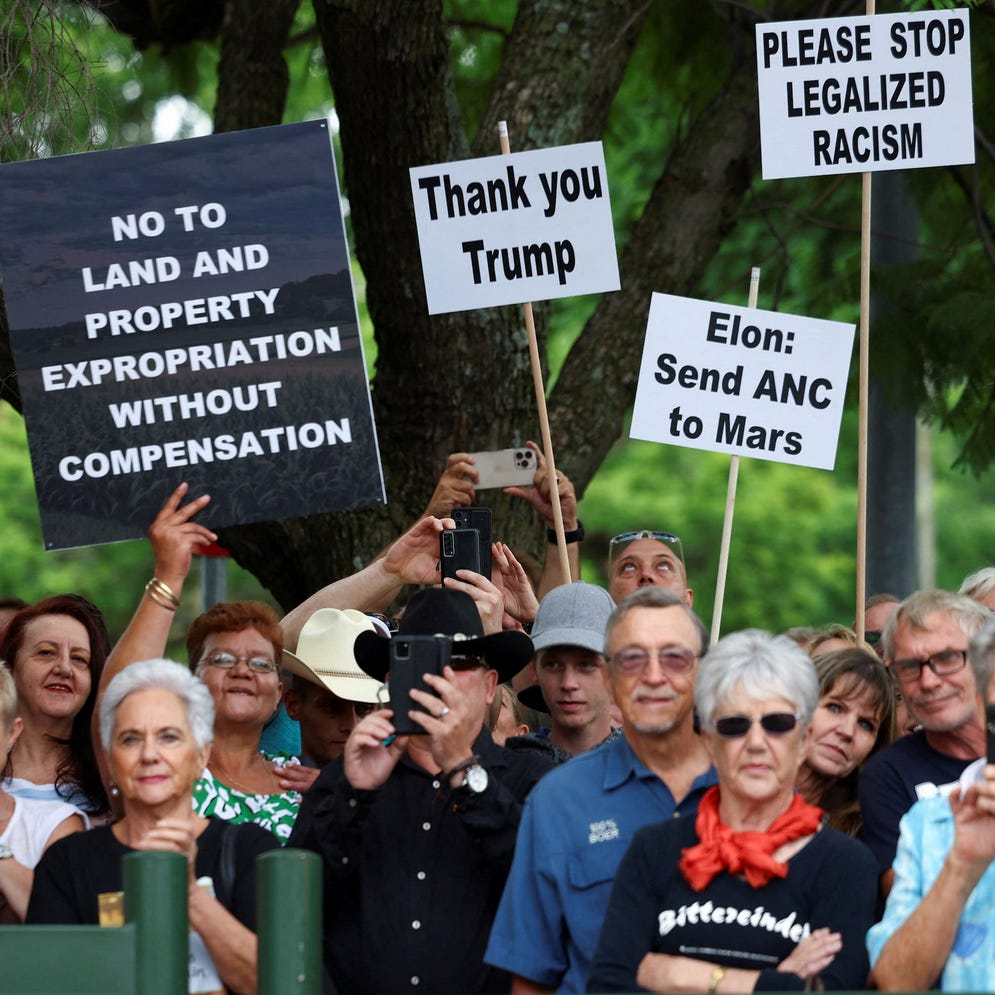
Against this backdrop of tumultuous uncertainty, some White South Afrikaners have chosen a different path. They’ve created a whites-only town called Orania, pursuing a policy of self-sufficiency and self-determination. One of the prime directives of Orania is that all the labour is done by the local white Afrikaners who live there. The town has been built completely by and for white people in the middle of an African desert. And what is the result?
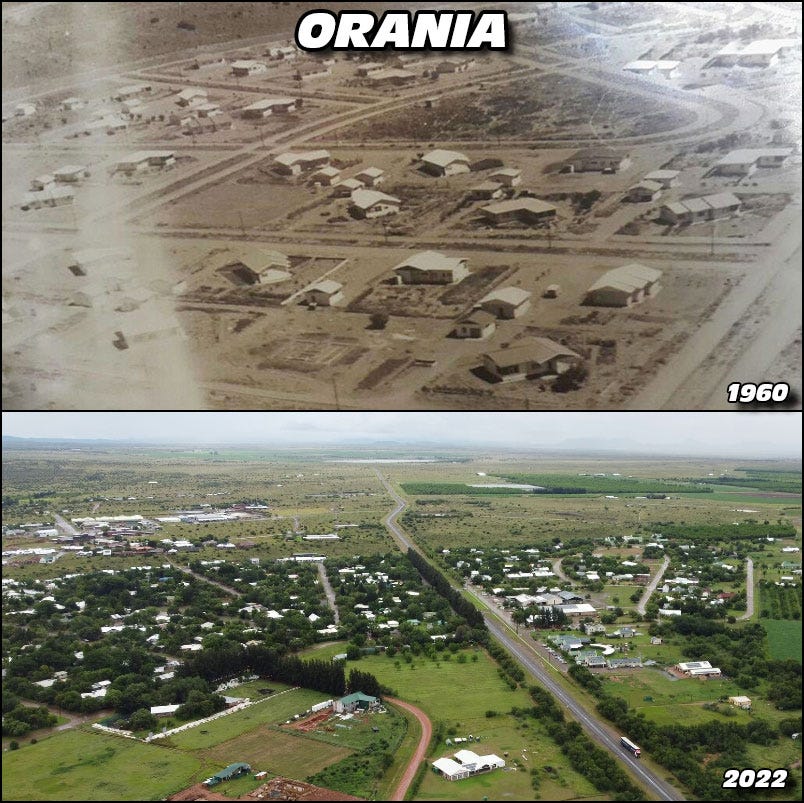
They took an arid, decrepit village, built their own irrigation and sewage systems, and in the span of 60 years turned it into a thriving, safe, and friendly community. Photos of Orania are like scenes from a forgotten world where children play in the streets, history is honored instead of buried, and the community comes together in acts of fellowship.

Despite almost unanimous negative coverage in the press and on social media, using words like “cult, creepy, extremist, etc. People who actually visit the town tend to be converted to a much more positive impression. For example, a journalist for the South African newspaper The Citizen named Andrew Kenny was sent there in 2015. He wrote:
Orania was a revelation to me. I was enormously impressed by its success, decency, safety, modesty, friendliness, cleanliness, by its spirit of goodwill, by its egalitarian attitudes and, above all, by its prevailing philosophy of freedom.
The Citizen chose not to publish his article. Similarly, several YouTubers over the years have been invited to the town to film content. I remember laughing at a video of a black YouTuber who went there and was astonished to find unlocked bikes. A black guy can spot an unlocked bike from a mile away.
So, to summarize, the black population of South Africa profited greatly from the white ruling class, which they rebelled against anyway, only to fail to make any material improvements to people’s living conditions in 30+ years despite receiving billions in foreign aid, and meanwhile, a small group of determined white people moved to the desert and built their own safe, thriving and friendly community from the ground up. Surely there’s a lesson in that.
Case Study 2: New York, New York
In October of 2024, Zohran Mamdani announced that he would be running for mayor of New York City. New York City is very diverse, with only ~30% of the population being non-hispanic White, according to the most recent census. Mamdani, an Indian Muslim born in Uganda, ran on a platform that explicitly targeted white people for taxation.
The only time an interviewer pressed him on this issue, he attempted to minimize his obvious appeal to the racial resentment among New York’s 70% minority voting bloc; nonetheless, that bloc received the message loud and clear.
According to the racial breakdown of the exit polls. The white bloc is the only voter bloc that would have elected Cuomo over Mamdani.
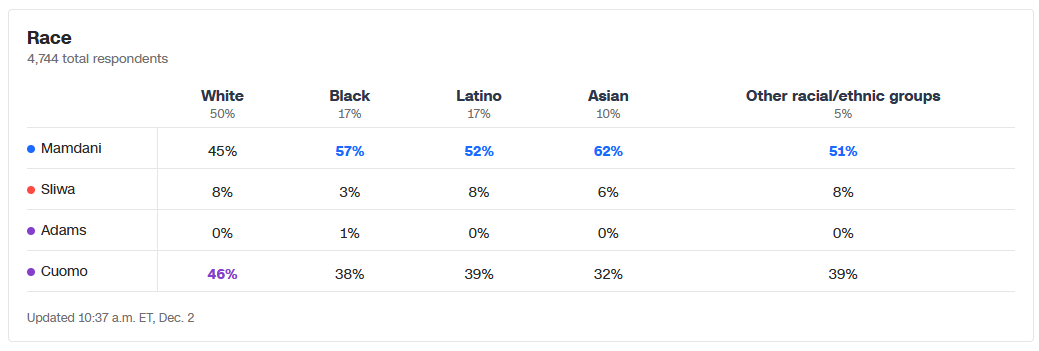
Mamdani, who grew up in South Africa, promised all sorts of amazing handouts in his campaign. From free daycare and mass transit to government-run, price-controlled grocery stores, Mamdani learned the lessons of South Africa well. Once you have a non-white majority in a democratic society, you can win elections by promising to take from the whites and give to the browns.
Racism: Theology
The theology of racism is too deep and complicated a topic to cover in depth for this essay. Fortunately, it has already been covered extremely well by the wise gentlemen of The Stone Choir Podcast — a must listen for anyone interested in this topic. Make sure to start from episode one and work from there.
For my part, I will simply share a couple of my favorite biblical examples of God demonstrating racism. First, we have Deuteronomy 28
Foreigners who live in your land will gain more and more power, while you gradually lose yours. They will have money to lend you, but you will have none to lend them. In the end, they will be your rulers.
This chapter deals with the consequences of disobedience to God. God promises to curse disbelievers by making them subservient to foreigners. How could this possibly be a curse to begin with if God did not mean for me to prefer my own kind? Earlier in the chapter, it reads:
A foreign nation will take all the crops that you have worked so hard to grow, while you receive nothing but constant oppression and harsh treatment.
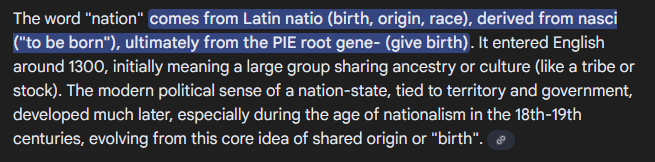
It is crucial to understand in context that the word “nation” is a synonym for “race”. A sober reading of Deuteronomy 28 reveals that conflict between races is a natural part of God’s design and that the race that is most faithful to Him will prosper and rule.
Secondly, we have Leviticus 25:39-55, wherein God explains to the people of Israel that when they enslave their own kind, they are to treat them much better and more humanely than when they enslave foreigners. Since God instructs his followers here to act with racial (or tribal/ethnic if you prefer) partiality and sets rules for racial discrimination, and since God cannot sin, racism cannot be a sin. If you think this is debunked by Galatians 3:28 (which is covered in depth in an episode of Stone Choir), then you are accusing God of sin.
Conclusion
Since racism is not a sin or moral failing but a natural part of God’s design, and since White people are threatened with retribution and oppression when they give up power, like in South Africa, or when they become a minority, like in New York, the obvious course for White people is to “tribe up” in the furtherance of their own security and group interests. Or, put another way, we must secure the existence of our people and a future for white children.
Racism is only bad when it is a white person who is racist. Even though we are a minority on earth, saying you are proud of your white heritage is not done, but if a black person says it, it is great!
As a white person living in Uganda, I can tell you one thing; Ugandans are much more racist then most of the white people I know. They are racist towards whites, Chinese and to Africans more black than themselves.
I wrote about it, you might find it interesting; https://substack.com/@invertedreality/p-151642248
Ah and yes, I am also a racist, even though I have friends that are Ugandan/ Rwandan/ Korean/ Indonesian/ Turkish etc. It comes natural to a human being, it is a survival mechanism and we should not be shamed for it. That it is only the white race that is being shamed for it, should tell you something about our reality.
Racism can be morally virtuous. Racism can be morally neutral, that is, the simple rather than the moral good. Racism can be morally evil.
Because Racism is not a moral category.
Affective piety is a simple good; effective Piety is a moral good. Justice is a moral good. The Order of Charity is properly ordered goodness, therefore its implementation is morally good.
There are two kinds of people who harp on about anti-racism - the idolators who make a false god for themselves, calling good evil and evil good; and the witting servants of the Adversary, who want to tear down all that is good.